
TIMELINES
The real pool building timeline in Sydney.
Stage by stage, from first site visit to first swim. And the question behind the question: when do you need to start to be swimming by summer?
24 July 2026 · Wright Pools Journal
The short answer
Six to nine months, honestly counted.
Construction of a concrete pool takes around fourteen to twenty weeks. That is the number most builders quote, and on its own it is misleading, because it starts the clock at excavation. Before a machine touches the ground there is design, engineering and approval, and after the shell is finished there is an interior, a barrier inspection and a handover.
Counted end to end, from the first site visit to the first swim, most of our projects run six to nine months. Where a project lands in that range depends mostly on one thing: which approval path the site needs.
Stage by stage
Where the months actually go.
Site visit, survey, and the pool drawn to suit the block and the architecture. Structural engineering runs in house alongside the design, so the drawings that go out for approval are buildable from day one.
A complying development certificate typically lands in two to six weeks. A development application through council commonly takes two to four months. This stage sets the spread between a fast project and a patient one.
The dig, any piering to rock, plumbing rough-in, and the steel cage that gives the shell its strength. On sloping or rocky ground this stage carries the most variability, which is why we walk the site with the engineer before quoting it.
The shell is sprayed in a single day, then cures for roughly a month to reach strength. The site does not sleep through it: fencing, coping, paving and equipment installation continue around the shell while the concrete does its quiet work.
Tiling or interior render, coping laid, glass fencing in, equipment commissioned. On a fully tiled pool this stage runs longest, and it is the stage that decides how the pool looks for the next few decades. Choosing finishes early keeps it off the critical path.
The pool is filled and balanced, the barrier passes its compliance inspection, and we walk you through pump, filter, heating and care. Then the pool is yours.
After the last week
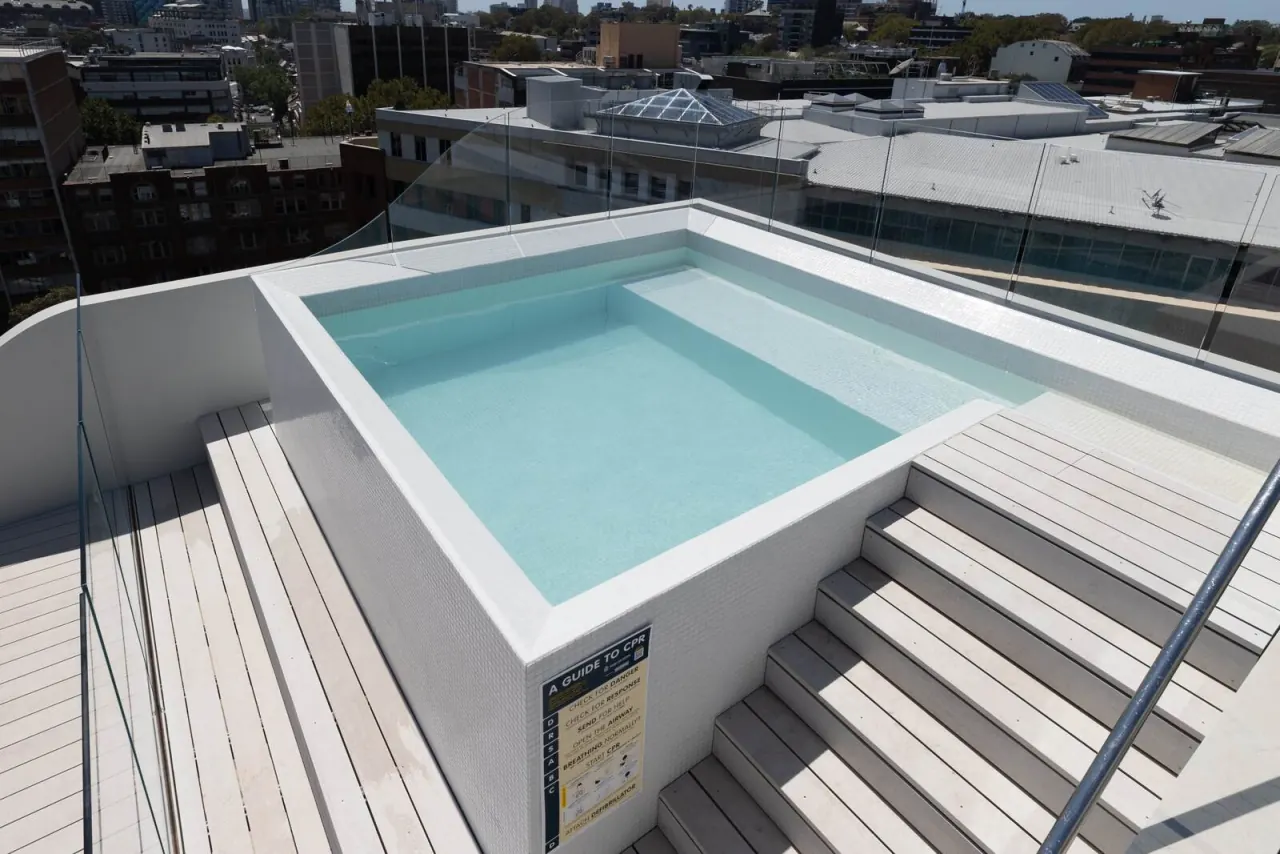
The last week is the handover: water in, equipment running, the walk-through done.
Gupta Residence, North Bondi.The seasonal maths
Swimming by December starts in autumn.
Work backwards from the first hot weekend. If construction takes fourteen to twenty weeks, the machines need to be on site by winter. For that, approval needs to be in hand by late autumn, which means the design brief should start in March, April or May for a CDC site, and earlier again where a DA is likely.
Every October the phone runs hot with owners hoping to swim by Christmas, and the honest answer is usually next Christmas. The owners who swim first are the ones who briefed us while their neighbours were putting the cover on. Winter is also a genuinely good time to dig: the ground is drier, the schedule is calmer, and the landscaping has time to settle before the season starts.
The fine print
What stretches a timeline.
Three clean runs
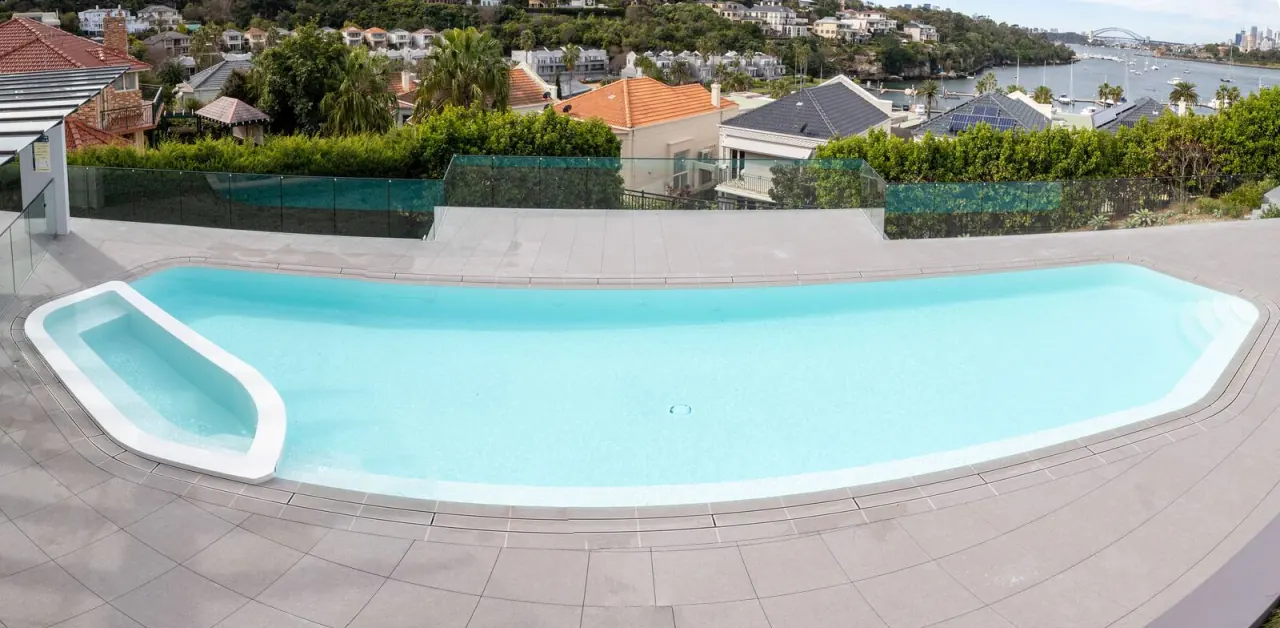
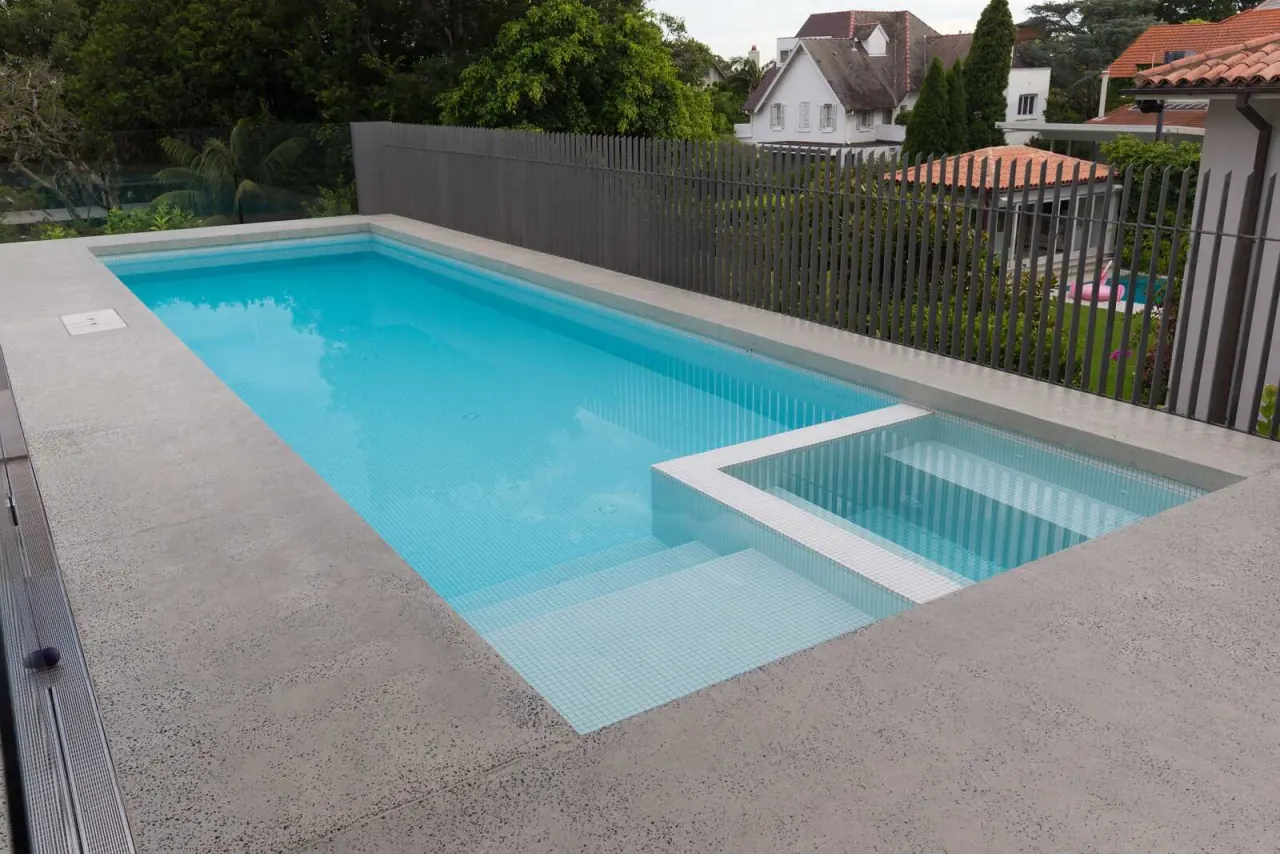
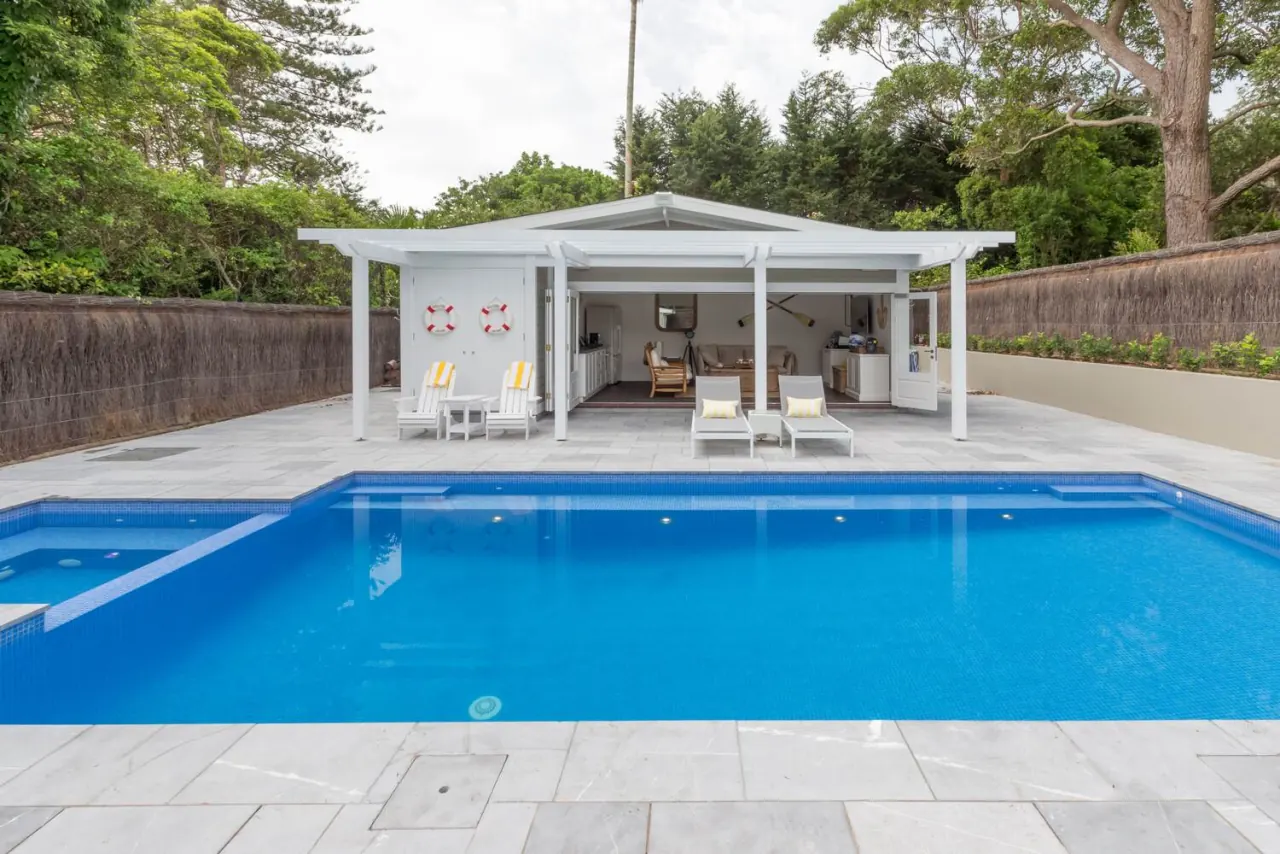
What sixteen weeks of build looks like, finished.
Planning it properly
One schedule, owned by one supervisor.
A timeline holds together when one person owns it. On every Wright project, the same supervisor runs the job from excavation to handover, and the program covers the whole picture, approvals included, not just the weeks the machines are visible. The full method is on our process page.
Timeline and budget travel together, so if you are sequencing decisions, read what drives the cost of a concrete pool next. And if your build has to thread a slope or rock shelf, the sloping block guide covers what that means for the program.
Frequently asked