
APPROVALS, EXPLAINED
Do you need council approval for a pool in NSW?
Almost always, yes. The useful question is which of the two approval paths your block needs, and how long each one takes. Here is the plain-language version.
24 July 2026 · Wright Pools Journal
The short answer
Every pool needs a ticket. There are two kinds.
An in-ground swimming pool in New South Wales needs formal approval before a single machine arrives on site. There is no practical exception for the kind of concrete pools we build. The choice is between two pathways.
The first is a complying development certificate, or CDC. It is a fast-track approval issued by a private certifier, or by council, when the pool meets a set of preset state-wide standards. The second is a development application, or DA, lodged with your local council and assessed on its merits. Same destination, different roads, very different timeframes.
Path one
The CDC. Fast, if your site plays along.
A CDC works like a checklist rather than a debate. The NSW planning codes set out standards for where a pool can sit on a block: how far from each boundary, how it relates to the house, how much cut and fill the site works involve, and what kind of land it sits on. If the design ticks every box, a certifier can issue the approval without the project ever joining a council assessment queue.
In our experience a CDC is typically issued within two to six weeks of lodgement, provided the documents are complete. That last clause does the heavy lifting. The certifier wants proper plans, structural engineering, and a clear picture of the site. Projects stall at this stage because paperwork arrives half-finished, not because the system is slow.
When a CDC is off the table.
The checklist has hard edges. As a rule, a CDC is not available when the property sits in a heritage conservation area, when the pool sits forward of the building line or inside a foreshore area, or when the site needs more excavation and fill than the standards allow. Steep land is the common trigger in our part of Sydney. A pool cut into a serious slope often needs deeper excavation or higher retaining than the code contemplates, and that pushes the project onto the second path.
Path two
The DA. Slower, but it gets the hard sites through.
A development application is a merit assessment. Council planners look at the design, the site, the neighbours and the local planning controls, and make a judgement. There is no fixed checklist to satisfy, which is exactly why the difficult and the beautiful sites end up here: the steep block above the beach, the home in a conservation area, the garden that runs to the waterline.
The honest timeframe for a pool DA in Sydney is two to four months, and longer is not rare. Councils differ. Bushfire mapping, foreshore controls and heritage referrals each add steps. None of this should put you off a site you love. It just needs to be in the program from day one, which is why we map the approval path at the first site visit, before anyone falls in love with a drawing that cannot be approved.
What the application actually contains.
Either path runs on the same raw material: survey, site plan, pool plans and sections, structural engineering, stormwater and drainage detail, and landscape information where council asks for it. Because our engineering happens in house, the drawings and the structural design come from the same office, which keeps the documents consistent and the questions from council short.
Built to disappear
A relaxed family pool set into the bushland at Castle Cove. Designed to disappear into the planting.
Scard Residence, Castle Cove.Local knowledge
What we see across Sydney's councils.
Most of our residential work runs through Northern Beaches Council, Woollahra, Mosman and North Sydney. Across the Northern Beaches, the recurring themes are slope, bushfire-prone land in the Forest District, and foreshore controls around Pittwater. In the Eastern Suburbs, heritage conservation areas and tight boundary setbacks do the deciding.
After more than five decades of lodging pool applications with these councils, we can usually tell you at the first site visit which path your block will take. Not as a guess, but because we have built a few streets away before.
Three councils, three pools
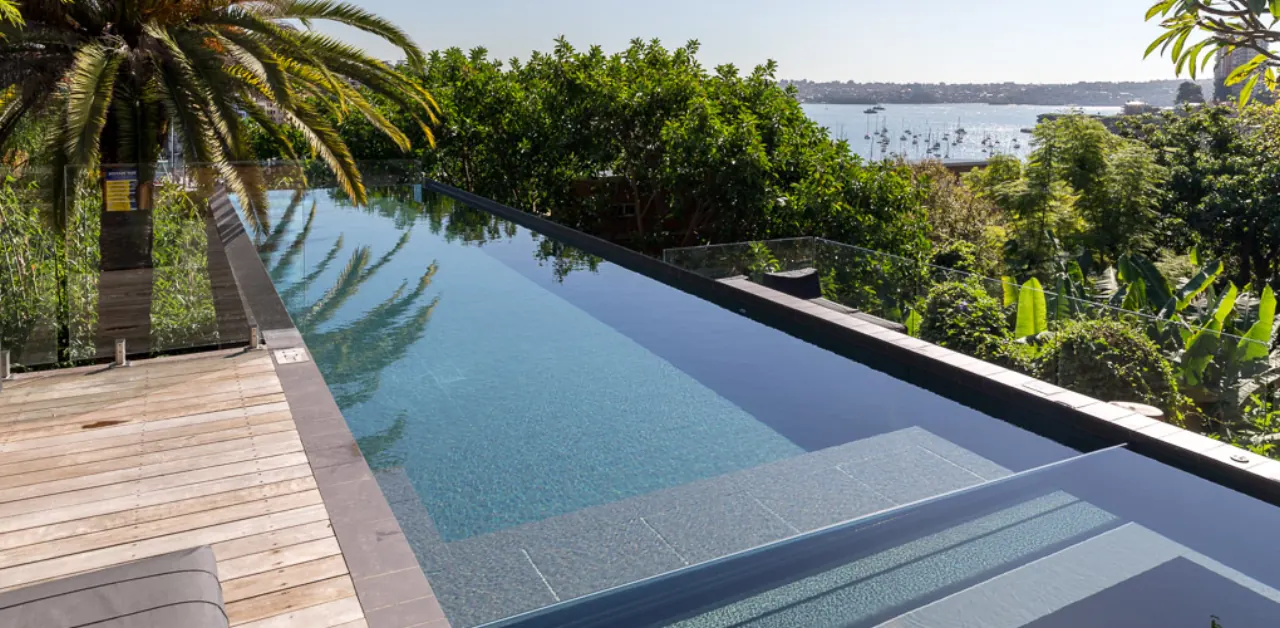
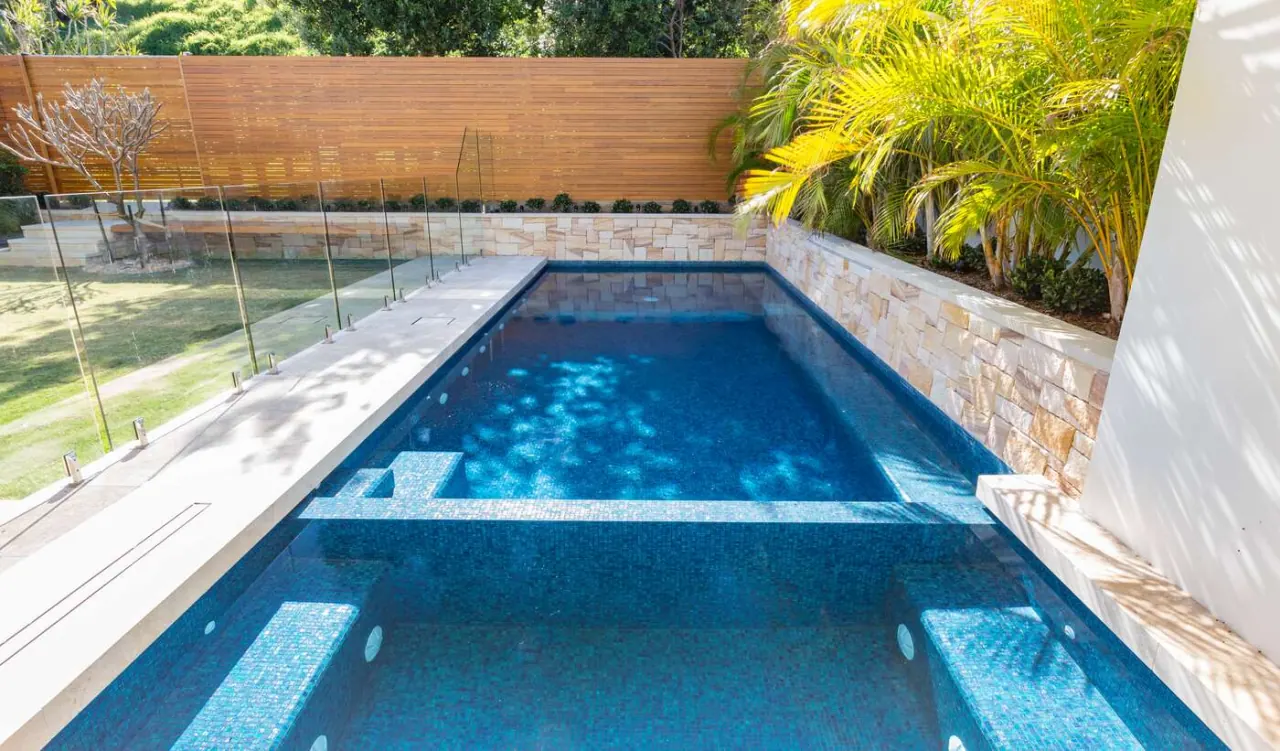
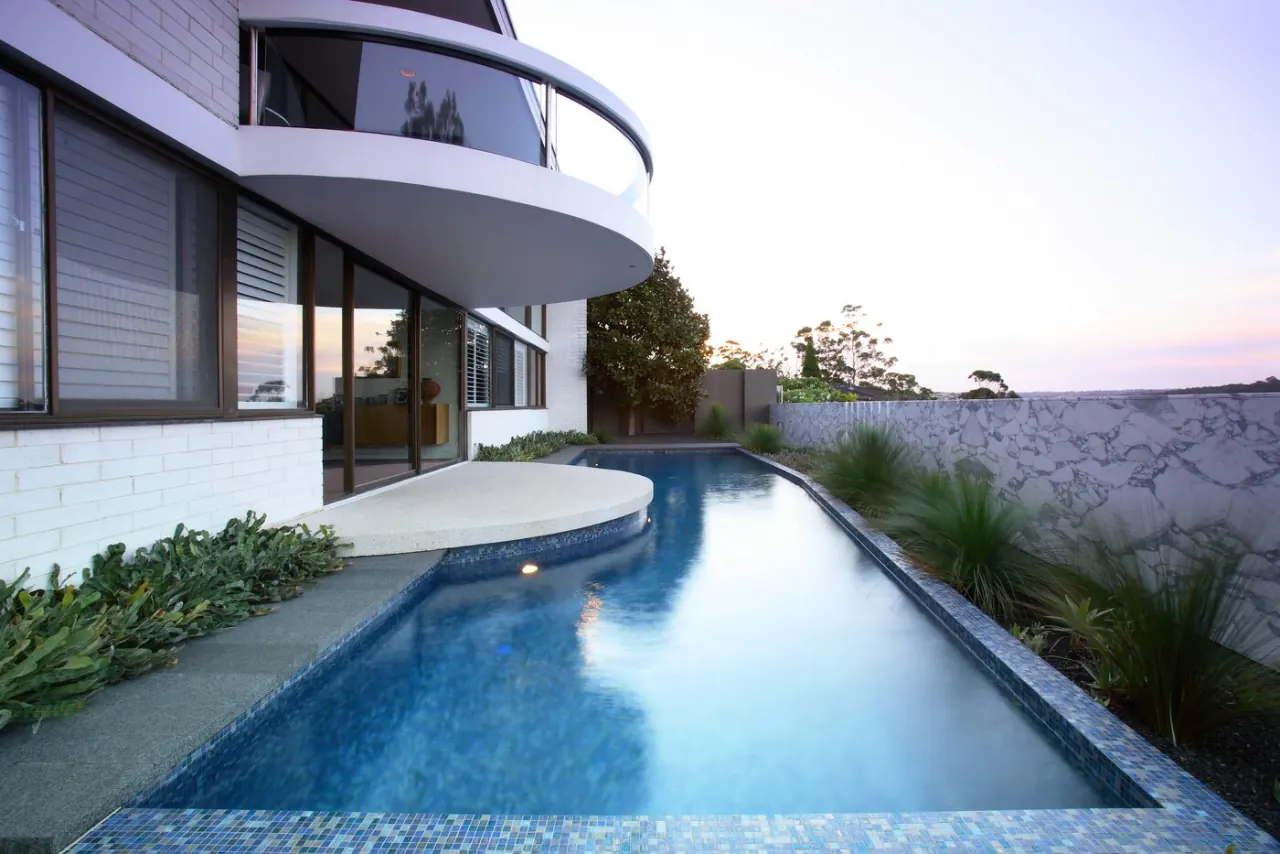
Different LGAs, same paperwork discipline.
After the approval
Fencing, registration, and the final sign-off.
Who does the chasing
Approvals are the builder's job.
You should not spend your evenings learning planning law. Approvals are step three of our five-step process: we prepare the plans, lodge the application, and deal with the certifier or council until the approval is issued. The owner signs the forms. We do the rest.
Approval costs and timeframes also flow into the overall project picture, which we cover in what drives the cost of a concrete pool. And if you are still weighing up materials, the approval process is identical either way, but the site constraints that force a DA are often the same ones that rule out a fibreglass shell altogether.
Frequently asked